Start with the path: up, out, and around
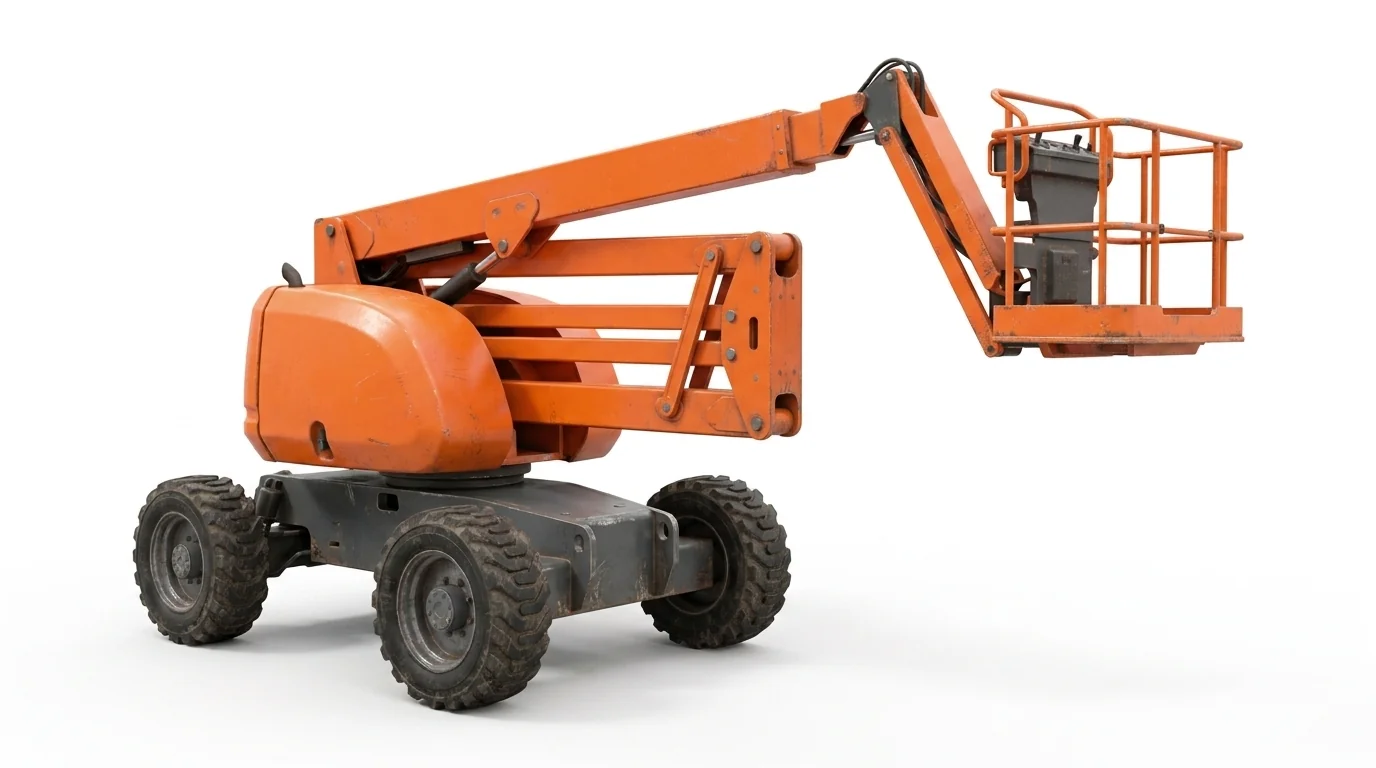
Articulating booms are chosen when the platform must move vertically, then reach out horizontally, and finally arc over or around an obstruction. The key questions are:
- Can the machine sit below the task, or must it park off to the side?
- How far must the platform reach out before it can go up and over?
- What minimum standoff is required to avoid pipes, conveyors, signage, or canopies?
Measuring the horizontal reach to the edge of the obstruction, plus the clearance needed to arc above it, narrows the class of articulating boom that fits.
Louisville facilities that drive this choice
Local distribution buildings and aircraft support spaces often combine tall ceilings with dense overhead utilities. Production floors in regional manufacturing sites mix mezzanines, cranes, and equipment lines that block straight approaches. Those layouts favor knuckle articulation for precise positioning without relocating the base machine repeatedly.
Surface and power: slab vs. mixed terrain
- Slab work: For sealed floors in healthcare or light assembly areas, consider electric or hybrid articulating models designed for non-marking tires and tighter aisle turning. See also: /electric-scissor-lift-rental/ for purely vertical slab tasks.
- Mixed or rough ground: In parts of Louisville affected by seasonal moisture or fill, an outdoor parking spot can be soft or rutted. Rough-terrain articulating booms with higher clearance and aggressive tread are better suited. Compare with /rough-terrain-scissor-lift-rental/ if the job is mainly vertical with minimal outreach.
Height, outreach, and footprint constraints
- Height window: Identify the exact work height and the lowest clearance point on the way up and over. The boom’s working envelope must exceed both.
- Outreach: The horizontal reach to the work face often governs size more than platform height in up-and-over scenarios.
- Footprint: Check aisle width, door height, and turning radius from the access route to the work zone. If the approach includes docks or thresholds, confirm curb and ramp transitions.
Weather and schedule factors
The regional climate swings from humid summers to freezing periods. Plan for units with reliable hydraulics and power systems that handle temperature changes, especially for night maintenance in logistics operations. For extended exterior projects, support gear such as /generators-light-towers-rental/ can stabilize lighting and auxiliary power.
Related categories
- Need long, unobstructed reach from a stable set-back? See /telescopic-boom-lift-rental/.
- Handling materials up to placement height? Review /telehandler-rental/.