Match runtime and load to logistics and maintenance cycles
Power needs vary across Louisville’s freight and manufacturing schedules. A generator spec begins with total running load, motor start surges, and whether the unit can sit close to the distribution equipment it feeds. Long corridors in large sorting buildings or spread-out repair zones may require longer cable runs; voltage drop and cord routing can influence whether a larger unit or a closer placement makes more sense.
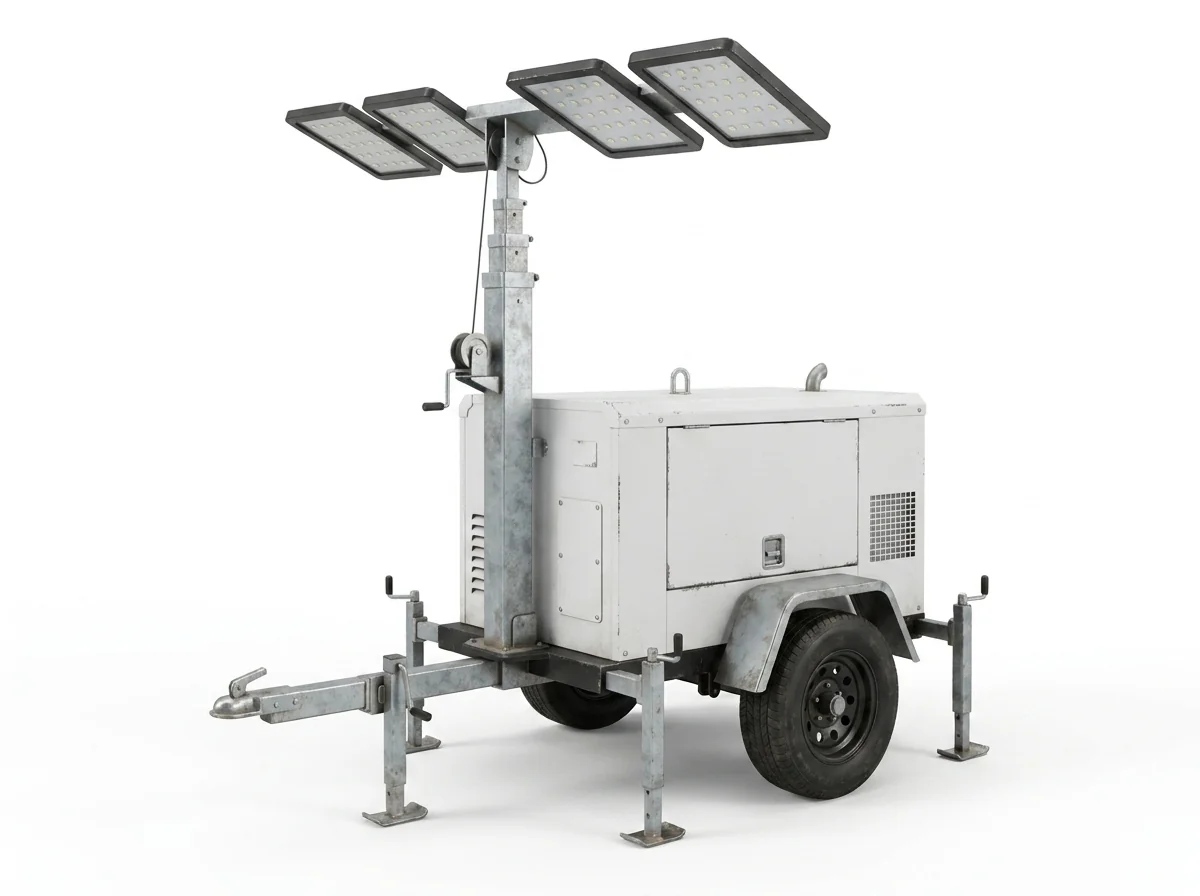
Light coverage follows task geometry. Narrow aisle work calls for controlled, lower-glare illumination. Yard or staging areas benefit from mast height and broader beam patterns. If the equipment must remain outside, plan for wind exposure and soft ground when deciding between wheel-mounted towables and more compact units positioned on firmer surfaces.
Terrain and weather influence cold starts and stability
Karst-influenced pockets and the Ohio River floodplain can leave topsoil soft after rain. Tow-behind towers and gensets need a path that resists rutting, especially at turn-ins. Where access routes cross gravel or wet grass, a rough-terrain lift may be involved to service fixtures; coordinate with the lift choice at /rough-terrain-scissor-lift-rental/ or task reach at /boom-lift-rental/.
Seasonal humidity and winter freezes affect fuel and batteries. Longer runtime plans benefit from fuel type and tank sizing that tolerate temperature swings. For indoor-sensitive work, consider emissions and sound where slab-rated access and ventilation matter; pairing indoor tasks with /electric-scissor-lift-rental/ often sets generator placement outdoors with cabling through doorways.
Placement, cabling, and light aim
- Can the unit sit below the task or must it be offset to avoid doorways and dock traffic?
- Are there grade changes that limit leveling or mast extension?
- Will cabling cross pedestrian or forklift lanes from /forklift-rental/ areas?
For light towers, confirm whether the target is a fixed bay, a moving load area, or a temporary barricade line from /temporary-fencing-barricades-rental/. Aim and mast height are constrained by nearby structures, wind exposure, and reflection off metal cladding.
Typical pairings with aerial access
In production line shutdowns, a compact generator may support lighting and small tools for slab work with /vertical-mast-lift-rental/. Outdoor fixture service on uneven ground often pairs a towable tower with /articulating-boom-lift-rental/ for up-and-over reach around conveyors or ducting.
Actual site conditions, manufacturer instructions for each unit, and facility procedures govern any exterior or elevated work.