Map reach and position
- Can the machine sit below the task? Use /electric-scissor-lift-rental/ indoors or /rough-terrain-scissor-lift-rental/ outside for straight-up work where floors or pads allow.
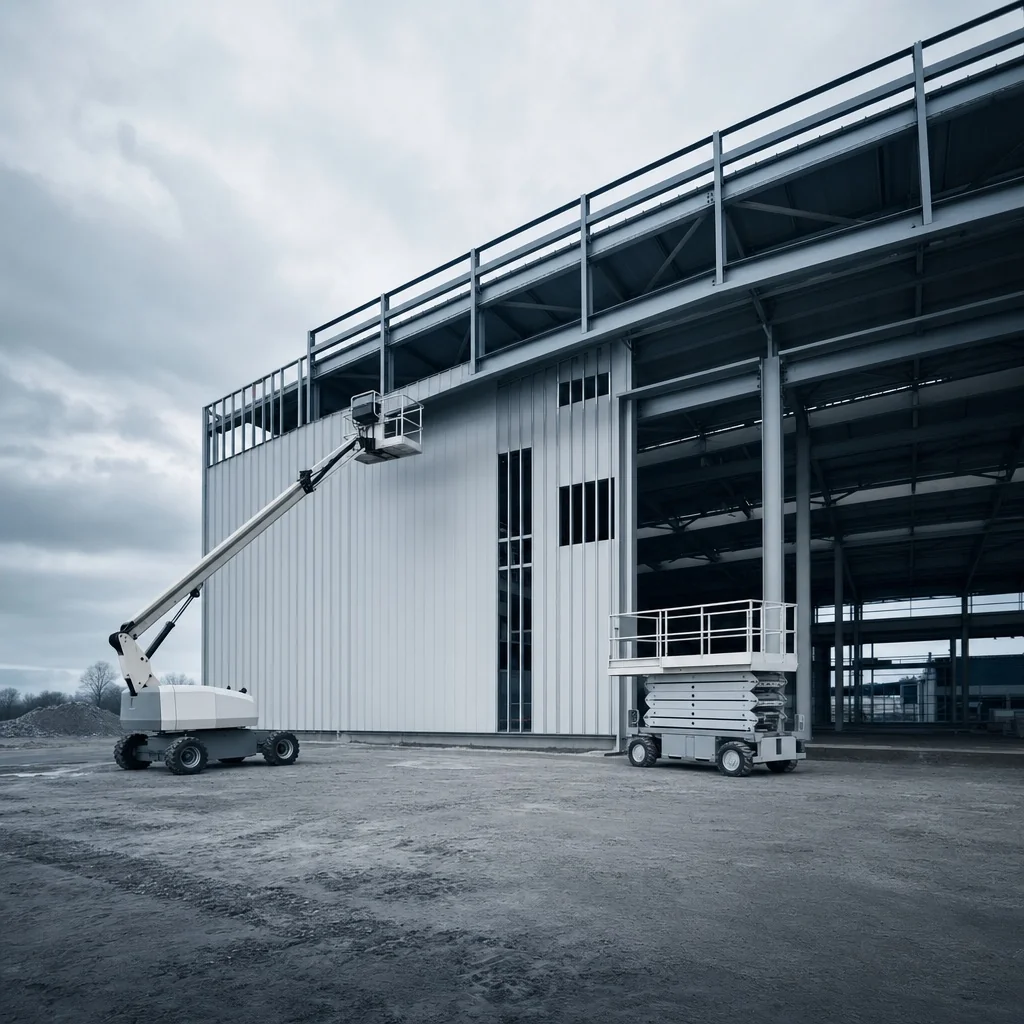
- Need reach over conveyors, duct, or racking? Start with /articulating-boom-lift-rental/ for obstacles or /telescopic-boom-lift-rental/ for longer, direct reaches. General aerial categories are outlined at /aerial-lift-rental/ and /boom-lift-rental/.
- Tight service bays with light payloads often fit /vertical-mast-lift-rental/.
Surface and route in the river city context
Karst-influenced areas and the nearby floodplain can leave yards soft after rain and freeze-thaw cycles. Exterior routes may require ground-friendly tires and grade capability, while interior corridors demand compact footprints and non-marking tires. Dock transitions, thresholds, and elevators set practical limits on machine width, weight, and turning radius.
Load, tools, and cycle time
Lighting repairs, sprinkler work, and sensor upgrades usually carry light payloads and benefit from compact platforms. Industrial changeouts add weight and favor larger platforms or material handlers like /telehandler-rental/ and /forklift-rental/ for staging. If work occurs overnight, plan for lighting at /generators-light-towers-rental/ and storage at /storage-containers-rental/ to keep aisles clear.
Weather and facility constraints
The regional climate ranges from humid heat to winter freezes, which affects hydraulic responsiveness and battery performance. Indoor tasks prioritize emissions and sound; outdoor work faces wind exposure around long building faces. In all cases, actual conditions, the selected unit’s instructions, and site procedures govern elevated work.
Site products that complete the plan
- Perimeter control and safe walk paths: /temporary-fencing-barricades-rental/
- Power and illumination for maintenance windows: /generators-light-towers-rental/
- Secure staging of parts and tools: /storage-containers-rental/